UK Bagasse Tableware Wholesale: A Sourcing Guide for Foodservice & Distributors
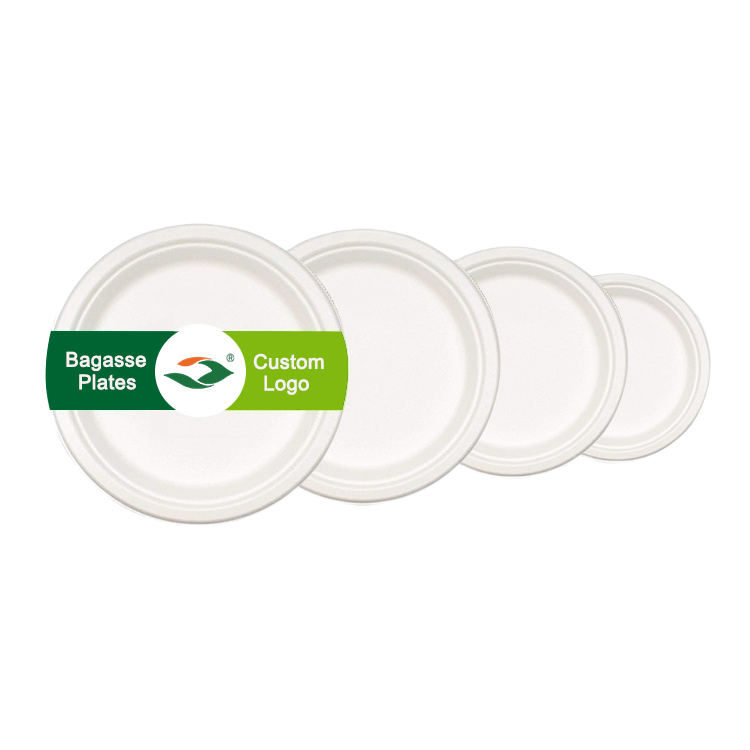
Britain’s foodservice sector is in the middle of one of the biggest packaging shifts in a generation. England banned most single-use plastic plates, bowls, trays and cutlery in October 2023, Scotland and Wales moved even earlier, and the Extended Producer Responsibility (pEPR) regime now charges packaging fees based on how recyclable your materials really are. Add the Plastics Packaging Tax on top, and plain plastic disposables are becoming both legally risky and financially unattractive. This guide walks UK restaurateurs, caterers and distributors through exactly how to source certified bagasse tableware from our own factory in Qingdao, China — covering the regulatory landscape, the certifications British buyers should demand, shipping terms, lead times, minimum orders, sampling and import costs.
Why the UK Market Is Moving Away from Plastic Disposables
The regulatory squeeze on single-use plastics has been building for years across all four UK nations, and bagasse — the fibrous residue left after juice is pressed from sugarcane — has become the go-to replacement for operators who want a renewable, plant-based product with real structural performance.
England’s single-use plastic ban and its regional cousins
Since October 2023, businesses in England have not been allowed to supply plastic plates, bowls, trays, cutlery, balloons sticks or polystyrene food containers, with a second wave restricting items like plastic-stemmed cotton buds in 2024. Scotland phased out many single-use items earlier, and Wales has applied some of the toughest rules in Europe, including a ban on plastic cutlery, straws and stirrers that predates England’s. What was once a “green option” is now simply what compliant operators use.
pEPR: packaging fees based on recyclability
From April 2025, the Extended Producer Responsibility (pEPR) scheme requires producers and importers to report packaging data and pay modulated fees. The logic is straightforward: the harder your packaging is to recycle, the more you pay. A plastic-coated or multi-layer container attracts a higher levy, while a certified compostable fibre product that diverts waste to organics recovery faces a far lighter burden. For distributors who carry thousands of SKUs, the recyclability scoring has turned packaging choice into a core cost decision.
Plastics Packaging Tax: the direct cost of virgin or low-recycled plastic
UK businesses importing or producing more than 10 tonnes of plastic packaging per year must pay the Plastics Packaging Tax on any plastic packaging containing less than 30% recycled content. For 2025/26 the rate is £217.39 per tonne. Bagasse tableware contains no plastic at all, so it sits entirely outside the scope of the tax — a real, quantifiable saving on every container that crosses the border.
What Certified Bagasse Actually Delivers in Commercial Service
Bagasse products are pressed from cleaned sugarcane fibre into dense, sturdy plates, bowls, trays and clamshell boxes. Because there is no plastic lining or synthetic coating, they behave predictably across the temperature ranges a busy UK kitchen demands.
- Heat and liquid resistance: handles hot, oily and saucy dishes — curries, Sunday roasts, fish and chips — without soaking through or collapsing; comfortable with hot liquids and freezer storage.
- Microwave and oven safe: fine for reheating in the microwave at normal power; many products tolerate short bursts in a conventional oven up to around 200°C, though tolerances vary by product and you should never place bagasse under a grill or over a flame.
- Breakdown profile: home- and industrially compostable, typically within 60–90 days in a commercial composting environment, depending on certification and conditions.
- PFAS-free: plain bagasse needs no fluorinated grease-resistant coatings, which matters as PFAS scrutiny tightens globally.
Certifications UK Buyers Should Demand
Compliance is where reputable sourcing pays off. A bagasse product is only “compostable” in a way that satisfies regulators, auditors and HACCP inspections if it carries recognised certification, and only food-safe if it meets approved contact standards. When you shop with a factory-direct supplier, ask to see the certificates before you commit to a container.
| Certification / Standard | What it proves | Why UK buyers care |
|---|---|---|
| EN 13432 (often shown as DIN EN 13432) | Compostability under industrial composting conditions (the European standard) | Baseline for compostable claims across the UK & EU; expected by auditors and pEPR recyclability scoring |
| BPI (ASTM D6400) | Composts in ASTM-certified commercial facilities (North American standard) | Useful for UK distributors who also export; a widely recognised mark of genuine compostability |
| OK Compost HOME | Breaks down in home/backyard compost conditions | Supports home-compostable claims UK consumers increasingly look for |
| FDA & LFGB | Food-contact safety (US FDA and German LFGB food law) | Rigorous food-safety proof that reassures UK importers and food authorities |
A factory that holds BPI, DIN EN13432, OK Compost HOME, FDA and LFGB simultaneously is signalling that its materials have passed demanding international scrutiny — the kind of evidence a UK distributor wants to attach to an audit file. Our Qingdao facility holds exactly these certifications, and we provide documentation with every shipment. For more on how these standards fit together, see our compostable certification standards page.
Sourcing from China: The Practical Wholesale Process
Buying direct from a factory in Qingdao rather than through a UK reseller cuts cost per unit, but it shifts a few responsibilities onto the importer. Here is how the process typically runs for a UK foodservice buyer or distributor.
Incoterms: FOB, EXW and DDP
- FOB Qingdao — the classic choice for experienced importers. The price covers the goods loaded on board at the Chinese port; you arrange and pay for ocean freight, insurance and UK clearance. You keep maximum control over logistics costs.
- EXW — you collect the goods from the factory and handle everything downstream. Lowest product price, most work.
- DDP — the supplier arranges freight, UK customs clearance and duty, and delivers to your door. Simplest for first-time importers, at a higher all-in price. Our factory can quote FOB, EXW or DDP depending on your preference.
For a detailed comparison of the two most common shipping terms, read our guide to FOB vs EXW shipping terms for tableware importers.
Lead times, minimum orders and samples
Lead time depends on whether you order stock items or custom-moulded products. Standard bagasse tableware typically ships within one to three weeks after order confirmation, with container shipment to UK ports ranging from the low single-digit weeks for express arrangements to several weeks for economy ocean routes. Minimum order quantities are flexible — smaller runs can be staged for new buyers, while established distributors usually move full 20ft or 40ft containers. Whatever your volume, the right first step is a sample kit: request samples before committing, so you can test structural strength, grease resistance, finish and how the product photographs under your own menu lighting. We offer a sample request process and 24-hour quoting.
Custom branding and private label
Restaurant chains and distributors often want their logo on the product. Bagasse supports embossing for a clean, durable mark on the non-food-contact side, and food-safe printing options on certain ranges. Private-label cartons and custom sizes are available to wholesale buyers — confirm your brand method, quantity and artwork early so the tooling work runs in parallel with production planning.
Import Taxes, Duties and Costs UK Buyers Face
Budgeting for an import from China means looking beyond the unit price. UK buyers importing bagasse tableware from outside the UK should account for:
- Import duty / Customs tariff: determined by the UK Global Tariff classification of the goods at the point of entry.
- VAT: UK import VAT is generally charged on the landed value (goods plus freight plus duty) and is reclaimable for VAT-registered businesses.
- Freight and insurance: ocean container freight and optional cargo cover.
- Agent / clearance fees: customs brokerage and port handling.
Because bagasse contains no plastic, the Plastics Packaging Tax of £217.39/tonne does not apply — a genuine recurring saving versus importing plastic-based alternatives. Compare the full picture against plastic containers in our article on biodegradable food containers vs plastic cost.
Common Sourcing Mistakes to Avoid
- Trusting the word “biodegradable” — it is not the same as certified compostable. Demand EN 13432, BPI or OK Compost HOME documentation and check it against your shipment.
- Ignoring pEPR reporting — even if your packaging is compostable, you still need to report it correctly for 2025 onwards; misreporting attracts penalties.
- Skipping the sample stage — a 40ft container of the wrong finish or weak-moulding product is an expensive mistake; always sample first.
- Confusing oven tolerances across products — some items handle 200°C for short bursts, others less; confirm the specification for each SKU and never grill bagasse.
- Overlooking PFAS — coated “grease-resistant” items may contain fluorinated chemicals; specify plainly that you require PFAS-free product. See our PFAS-free range.
Buyer Checklist Before You Place a Container Order
- Confirm the relevant single-use plastic ban for each nation you serve (England, Scotland, Wales, NI).
- Verify your pEPR reporting obligation and how compostability affects your packaging fee.
- Request certificates (EN 13432, BPI, OK Compost HOME, FDA/LFGB) from the supplier before ordering.
- Confirm whether the product is PFAS-free and plastic-free.
- Decide your Incoterm — FOB, EXW or DDP — and budget freight, VAT and any duty.
- Request a sample kit and test under real service conditions.
- Agree lead time, MOQ, branding and inspection/documentation upfront.
Frequently Asked Questions
Is bagasse tableware legal for my UK restaurant or takeaway?
Yes. Bagasse plates, bowls, trays and containers are a compliant alternative to the single-use plastic and polystyrene items banned in England and elsewhere in the UK. Because they are plant-based and not plastic, they fall outside the scope of the single-use plastic bans and are not subject to the Plastics Packaging Tax. Just make sure your specific item (and any lid, straw or cutlery) is not itself a banned plastic product.
Does bagasse count as plastic for the Plastics Packaging Tax or pEPR?
No. Bagasse is a pressed sugarcane-fibre product with no plastic content, so it does not attract the £217.39/tonne Plastics Packaging Tax, which only applies to plastic packaging containing under 30% recycled content. For pEPR, certified compostable fibre packaging is scored more favourably than hard-to-recycle plastics, but you must still report it accurately as packaging.
Can I microwave or oven-heat bagasse containers?
Yes, with sensible limits. Bagasse reheats well in the microwave at normal power and many products tolerate short oven bursts up to around 200°C, though tolerance varies by product so check the specification for each SKU. Never place bagasse under a grill, broiler or open flame, and avoid prolonged high-power cooking or deep frying. For reheating ready meals, simply follow the guidance printed on the individual product.
What is the minimum order, and can I get samples first?
Our minimum order quantities are flexible and can be staged for new buyers, ranging upward to full 20ft or 40ft containers for distributors. Before any volume commitment, request a sample kit so you can test strength, grease resistance, finish and presentation under real service conditions. Quotes are returned within 24 hours and we ship samples worldwide.
What Incoterm is best for a first-time UK importer?
If you have import experience, FOB Qingdao gives you control over ocean freight and clearance. If you are new or want a simple all-in price delivered to your door, DDP (Delivered Duty Paid) removes the administrative burden — the factory arranges freight, UK customs and duty. EXW is the lowest product price but leaves every downstream step to you. We can quote FOB, EXW or DDP.
How long does bagasse take to break down?
Certified bagasse composts within roughly 60–90 days under proper industrial composting conditions, and OK Compost HOME-certified products are designed to break down in a home compost bin. Breakdown depends on the certified standard, moisture, aeration and temperature — which is exactly why choosing certified product matters rather than relying on a vague “biodegradable” label. Read more in our comparison of compostable vs biodegradable.
Factory-Direct Bagasse Sourcing with Qingdao Certification
When you source bagasse tableware for the UK, you want a partner who combines rock-bottom factory-direct pricing with the certifications British auditors actually ask for. Our own factory in Qingdao, China, manufactures molded bagasse, cornstarch, paper and cutlery tableware, and holds BPI (ASTM D6400), DIN EN13432, OK Compost HOME, FDA and LFGB certification. We ship FOB Qingdao in containers worldwide, with flexible MOQs, OEM/custom logo options, factory-direct wholesale, 24-hour quotation and samples on request.
Not sure which formats fit your menu — plates, bowls, clamshell boxes, compartment trays or cups? Request a wholesale quote or get a factory quote today. For trade enquiries you can also reach us on WhatsApp at +86 176 8572 4081 or email bygj3@qdbiotrade.com. Our export team can guide you through certifications, sampling, Incoterms and the paperwork UK customs needs.
Browse our product range — wholesale bagasse plates, bagasse bowls, clamshell boxes and food containers and cups — and see the full specifications on our certifications page.
Explore Our Range and Related Reading
If you are planning your global packaging strategy, these related guides will help:
- EU PPWR 2026 compliance — the EU PPWR 2026 compliance guide covers how the EU’s Packaging and Packaging Waste Regulation reshapes packaging rules in Europe after August 2026.
- Middle East / GCC sourcing — bagasse buying for UAE, Saudi Arabia, Qatar and the wider Gulf, including Jebel Ali and Dammam.
- 2027 foodservice trends — where the wider market is heading in our sustainable foodservice packaging trends 2027 guide.
- Eco tableware export compliance — how FDA, BPI, EN13432 and OK Compost fit together.
- Shipping from China — export and shipping details for bagasse containers from China.


